
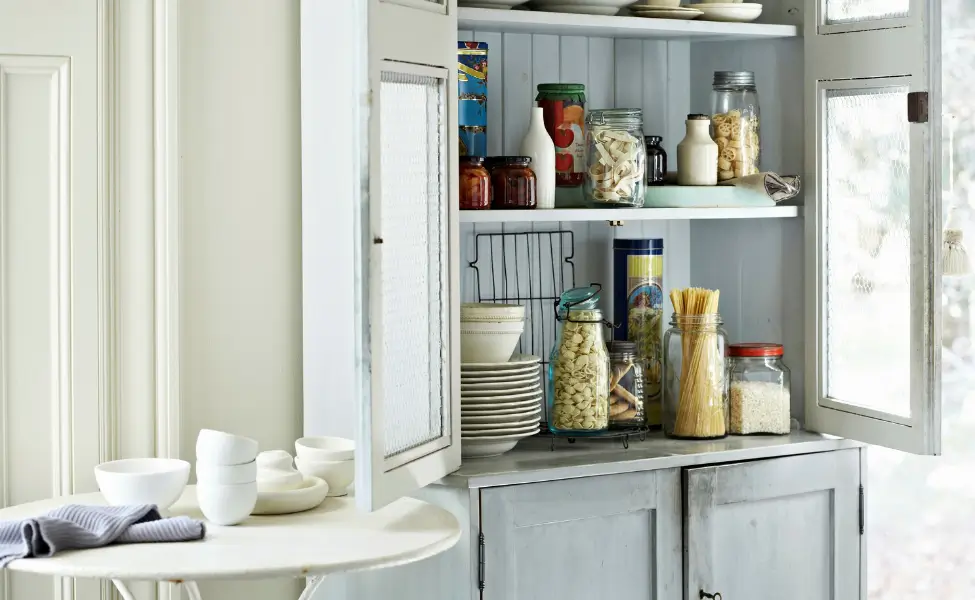
There was a time when I thought a good homesteader kept a full pantry.
I’d imagine myself standing there counting jars like they were trophies, measuring my worth by the shelf space.
Shelves lined with food.
Rows of preserves put up “just in case.”
Enough to prove I was doing it right.
But somewhere along the way, I realized something important.
A pantry doesn’t need to be full to be faithful.
It just needs to fit the life you’re actually living.
And that matters even more when you’re homesteading in a small, urban space rather than a rural fantasy.
The Pressure of a Full Pantry
If you spend any time reading about food or pantry storage, it can start to feel like you’re behind before you even begin.
There’s always someone with more jars, more shelves, more food put up than you.
And if you’re starting later in life, or watching your money carefully, that pressure can quietly steal the joy right out of it.
A full pantry can start to feel like a measuring stick instead of a help.
That’s when I knew something needed to change.
What Shifted My Thinking
Three years ago, my friend canned 60 jars of various pickles and relishes.
She gave away about 15, and by the time she finished the rest, some had been sitting for nearly two years.

The last jars tasted fine, but she didn’t enjoy them the way she had enjoyed the fresh ones.
That same year, another friend told me she’d canned 40 quarts of tomatoes because she thought she should.
The next year she canned 12, and she actually used them all.
Both of them had the same realization.
They were preserving for some imaginary emergency instead of for the meals they actually cooked.
What a Useful Pantry Actually Looks Like
Instead of a full pantry, my aim is for a useful one.
Here’s what that means in practice.
Foods You Actually Cook With
My household eats pasta once a week, so I keep about 10 to 12 packets on hand.
We rarely eat rice, so I keep one or two bags, not five.
Your useful pantry reflects your actual cooking habits, not someone else’s list of essentials.
That shift from “should” to “do” changed everything for me.
Quantities That Match Your Household
A two-person household doesn’t need the same stockpile as a family of six.
Yet many pantry guides assume everyone needs a year’s supply of everything.
I’ve settled on a rolling stock of about four to six weeks for staples.
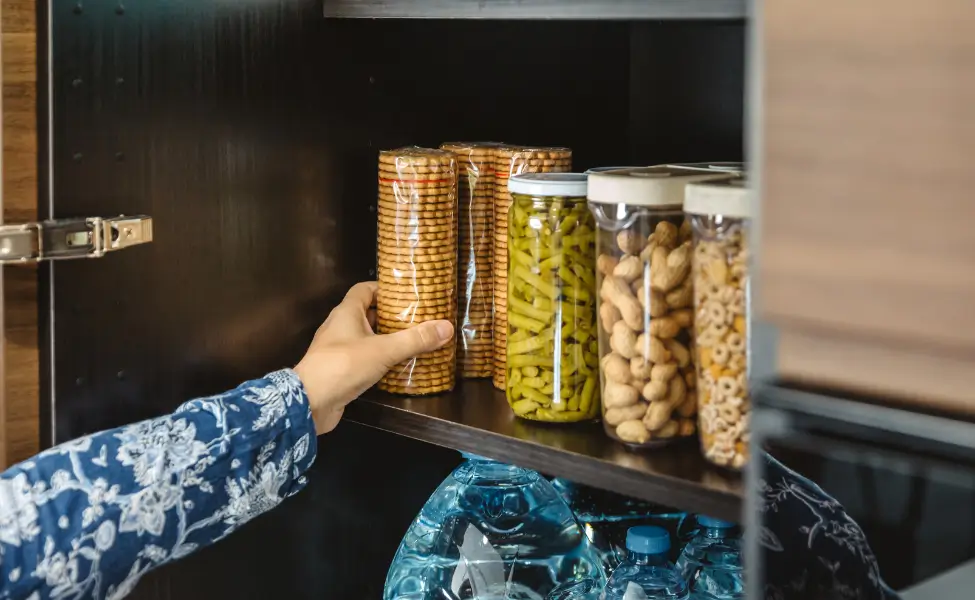
That means I’m not scrambling if I miss a shopping trip, but I’m also not managing massive quantities that require elaborate tracking systems.
For preserved foods, my aim is for one season’s worth.
If I dehydrate cherry tomatoes in the summer, I want to use them by next summer.
That keeps everything fresh and prevents waste.
More importantly, it keeps the pantry feeling like a resource rather than a burden.
Preservation Methods That Fit Your Body
I used to think you needed to can everything.
But with my osteoarthritis getting worse, and lifting heavy jars and standing for hours became genuinely difficult.
Now I will dehydrate more than I can.
Dehydrated onions, peppers, and tomatoes take up far less space, weigh almost nothing, and don’t require the physical effort of water bath canning.
I also freeze more than I used to.
Yes, it depends on electricity, but so does my refrigerator.
I’ve accepted that reasonable preparedness doesn’t mean preparing for every possible disaster scenario.
Storage That Works for Your Space
Not everyone has a walk-in pantry or a cellar; I don’t.
My pantry is actually a coat cupboard that I repurposed.
I use stackable clear containers for dry goods so I can see what I have.
I keep a simple list taped inside the cupboard door.
When I use something, I add it to the shopping list.
No complicated inventory systems, no spreadsheets.
Three narrow shelves hold preserved foods.
If those shelves are full, I stop preserving until I’ve used what’s there.
The physical constraint keeps me honest.
How to Determine “Enough” for Your Household
Start with two weeks.
That’s enough to cover a bad weather week, a bout of illness, or a tight budget period between paydays.
Calculate how much of each staple you use in two weeks by tracking for one week and doubling it.
Write it down.
That’s your baseline.
If two weeks feels comfortable and you have space and budget, extend to four weeks.
But don’t leap from two weeks to six months.
Build gradually as you learn what you actually use.
For preserved foods, think seasonally.
If you love strawberry jam, how many jars will you realistically eat before next strawberry season?
If the answer is eight, make eight.
Not 20.
The Real Costs of Overstocking
A too-full pantry costs more than money.
It costs time managing inventory, rotating stock, and tracking dates.
It costs energy feeling guilty about waste when things expire.
Add to that, it costs mental space worrying whether you have enough, even when you clearly do.
Last year my friend composted three jars of salsa because she’d made too much and couldn’t give it away fast enough.
Those jars represented hours of work and money she’d spent on ingredients.
The guilt felt worse to her than the waste.
Now she makes half batches.
I’d rather make salsa twice and enjoy it fresh than make a huge batch I’ll resent by jar number ten.
Thankfully I was able to learn from her first rather than feeling that misfortune.
What This Looks Like in Different Seasons
Winter is when your pantry sees the most use.
You rely more heavily on dried goods, frozen vegetables from summer, and preserved tomatoes.
You may keep more tinned fish and beans on hand because you make more soups and stews during this time of the year.
Summer is when my pantry shrinks.
Fresh produce is abundant and cheap.
I don’t need backup supplies of dried herbs when I’m cutting fresh ones from the garden.
This seasonal rhythm means my pantry breathes.
It fills slightly in autumn as I put up summer produce.
It empties through winter and spring.
When Enough Is Plenty
There is deep peace in knowing you have food you know how to use, you didn’t exhaust yourself putting it up, and you can still enjoy the process.
That peace matters, especially in this season of life.
Your pantry is not a contest, a preparedness scorecard, or proof of your worth.
It’s simply a support system for your household.
A small pantry used well is far better than a full one you resent.
We are not trying to impress anyone.
We are not trying to prepare for every imaginable scenario.
Instead, we’re trying to live well, eat well, and waste less.
My pantry gives me about six weeks of security if I needed it to, which feels right for me.
Your number might be different.
If You’re Just Starting
If you’re reading this and thinking your pantry feels too small, let me say this gently.
You don’t need to catch up or fill shelves.
Also, you don’t need to do what anyone else is doing.
Start with what feels manageable.
Perhaps that’s ten jars of your favorite jam.
Perhaps it’s a month’s supply of pasta and canned tomatoes.
Or, maybe it’s learning to dehydrate one type of vegetable this year.
Add slowly and let it grow with you.
A pantry built slowly, one careful choice at a time, will serve you better than shelves you filled in a panic.
The goal of homesteading was never “more.”
It was always enough care, thoughtfulness, and peace of mind.
If your pantry gives you that, even in small measure, then it’s doing exactly what it was meant to do.
What’s one thing in your pantry right now that makes you feel steadier?
That’s your starting place.